


Most trees in southern Indiana are perfectly fine. But some aren’t, and knowing the difference could protect your home, your family, and your neighbors from serious harm. If you’ve been wondering about a tree on your Princeton, IN property, understanding the warning signs of hazardous tree removal Princeton IN homeowners need to watch for is a smart first step.
Trees don’t usually fall without warning. Most of the time, there are signs. The problem is those signs are easy to miss if you don’t know what to look for, and by the time a tree comes down on a roof or a fence, it’s too late to be proactive. Here are 7 warning signs that a tree on your property may be a risk worth taking seriously.
Warning Sign 1: The Tree Is Leaning
A slight lean is completely normal for a lot of trees, especially those that grew toward sunlight over the years. That kind of lean develops slowly and the root system grows to support it. But a lean that’s new, or one that has noticeably increased over a short period of time, is a different situation entirely.
Leaning toward a structure, like your house, garage, or fence, is an immediate concern. Get out there and look at the base of the tree. If you see soil heaving up, cracking ground, or exposed roots that weren’t there before, that’s a sign the root system may be failing, and a failing root system means the tree can go down fast.
Don’t wait for the next Gibson County thunderstorm to find out whether that lean is a problem. The team at Whitledge Tree Service’s professional tree inspection and hazardous tree removal in southern Indiana can assess the situation and give you a straight answer about what you’re dealing with. They’ve been doing this since 2008, and they’ve seen what happens when a leaning tree gets ignored.
Warning Sign 2: Cracks or Splits in the Trunk
Vertical cracks running along the length of a trunk are a serious red flag. They indicate the wood has split under stress, and that kind of structural damage doesn’t fix itself. It usually gets worse, especially when ice or wind puts additional load on the tree.
Pay close attention to trees with co-dominant stems. That’s when two main trunks grow upward from the same point, forming a V-shape. Those trees are especially prone to splitting apart during storms because there’s no solid wood connecting the two stems, just a weak union at the fork. Southern Indiana gets its share of ice storms in the winter, and that weight on a co-dominant stem can be all it takes.
A cracked trunk is one of the most reliable indicators that a tree needs a professional set of eyes on it. Even cracks that have been there for years can suddenly worsen under the right conditions. A cracked trunk combined with a lean toward your home is an urgent situation, not a “we’ll get to it eventually” situation.
Warning Sign 3: Dead or Dying Branches in the Canopy
Dead branches are easy to spot once you know what to look for. In spring and summer, they’ll have no leaves while the rest of the tree is green. The bark will look gray or brown, feel brittle, and may be peeling away. These branches can fall without any warning, and they don’t need a storm to come down.
The real concern is when a tree has significant deadwood spread throughout the canopy. That’s a sign the tree is in serious decline, not just losing a limb here or there. There’s a difference between a little seasonal dieback at the tips of branches, which is pretty normal, and a canopy that looks like it’s dying from the inside out.
Dead branches hanging over a roof, driveway, or a spot where kids play are an immediate hazard. If you’ve got a big oak or maple near your house in Princeton or out toward Patoka that looks like it’s losing the battle, don’t let it go another season without getting a professional opinion. A dead branch the size of your arm can do real damage when it falls.
Warning Sign 4: Fungal Growth at the Base or on the Trunk
Here’s the thing about fungal growth: most homeowners don’t think much of it. They see mushrooms at the base of a tree and figure it’s just part of nature. But mushrooms, conks, or shelf fungi growing on or near a tree are a sign that something is rotting on the inside.
Fungal growth means the tree’s internal wood is decaying. The outside of the tree can look completely healthy, full canopy, no obvious damage, while the inside is hollow or severely compromised. That’s what makes this one of the most dangerous warning signs on this list. You can’t see the damage from the outside.
A tree that looks solid but is rotting internally can come down in wind that wouldn’t bother a healthy tree at all. If you notice any kind of fungal growth on a tree near your home or outbuildings, that’s worth a call to a professional right away. (And yes, this applies even if the tree looks totally fine otherwise.)
Warning Sign 5: Root Damage or Soil Disturbance
The root system is what keeps a tree in the ground. When it’s compromised, the whole tree becomes unstable, and the scary part is that root damage often doesn’t show up on the surface for years after it happens. By the time you see raised soil, cracking ground, or exposed roots near the base, the damage may already be severe.
Construction work is a common culprit. If you’ve had utility work done in your yard, a new driveway put in, or a neighbor broke ground nearby, the roots of trees in that area may have been cut or compacted in ways that stressed the root system. Drought does damage too. Knox County and the surrounding area has had some dry stretches over the past few years, and stressed roots are weaker roots.
A tree with a compromised root system can fall even in moderate wind, not just during a major storm. If you’ve had any kind of ground disturbance near a large tree on your property, it’s worth having someone take a look before the next storm season rolls in.
Warning Sign 6: The Tree Has Lost a Major Limb Recently
When a tree loses a large limb, the wound left behind is an open door for decay and disease. Wood-rotting fungi and insects move in through those wounds, and the decay can spread into the trunk over time. It doesn’t happen overnight, but it does happen.
There’s also a structural issue. When a big limb breaks off, the tree’s weight distribution changes. The remaining branches and trunk are now carrying load differently than they were designed to, and that puts stress on parts of the tree that weren’t stressed before. A tree that has lost multiple major limbs over the years may be in serious structural decline even if it looks like it’s still alive and growing.
The good news is that sometimes a tree like this can be saved with proper pruning and care. Other times, removal is the safer call. A professional assessment from Whitledge Tree Service can tell you which situation you’re dealing with, and that’s a lot better than guessing.
Warning Sign 7: The Tree Is Dead or Dying
A dead tree is a hazard. That’s really the bottom line. It needs to come down before it falls on its own, and it will fall on its own eventually. The question is just when and where.
Signs of a dead tree include no leaves during the growing season, branches that snap easily instead of bending, bark that peels away from the trunk without much effort, and a hollow sound when you knock on the trunk. Dead trees can stand for years, and some homeowners assume that means the tree is still stable. It isn’t. It’s just still standing.
Southern Indiana’s summer storms can bring down a dead tree that has been standing for a decade in a matter of seconds. If you’ve got a dead tree anywhere near your home, your car, or a fence line, dead tree removal is not something to put off. Whitledge Tree Service’s 24/7 emergency tree service in Princeton and Gibson County is available when something urgent comes up, but scheduling removal before it becomes an emergency is always the better option.
What to Do If You Notice Any of These Warning Signs
Don’t wait for the next storm to find out whether a tree on your property is dangerous. That’s not a gamble worth taking when your home and family are involved. The good news is that getting a professional opinion is easy and free with Whitledge Tree Service.
If a tree is actively leaning toward a structure or you can see visible trunk cracks, treat it as an urgent situation. Call for an assessment right away. But even if you’re just not sure and something looks a little off, getting eyes on it sooner rather than later is always the right call. That’s exactly what a professional tree inspection is for.
You can schedule a free estimate with Whitledge Tree Service for tree removal in Princeton and they’ll send out an experienced team to evaluate what you’re dealing with. No pressure, no guesswork, just a straight professional opinion from people who know southern Indiana trees and have been working with them since 2008.
Frequently Asked Questions
How do I know if a tree on my Princeton, IN property is actually hazardous?
The most reliable way to know for sure is to have a professional assess it. Whitledge Tree Service has served Princeton and the surrounding areas of southern Indiana since 2008, and our team knows what to look for. Warning signs like a new lean, visible trunk cracks, fungal growth, or significant deadwood in the canopy all indicate a tree that needs a closer look. Some hazards are obvious, but others, like internal decay, require a trained eye. A free estimate from Whitledge Tree Service is the easiest way to get a clear answer without the guesswork.
How much does hazardous tree removal in Princeton, IN typically cost?
Tree removal costs vary depending on the size of the tree, its location, and how difficult it is to access safely. Whitledge Tree Service offers free estimates so you know exactly what you’re looking at before any work begins. For complex removals near structures or in tight spaces, Whitledge Tree Service operates the largest crane in the southern Indiana service area, a 120-foot crane that makes difficult jobs safer and more efficient. Financing is also available for qualifying projects. The best way to get an accurate number is to reach out directly and schedule your free assessment.
Will my homeowner’s insurance cover the cost of hazardous tree removal?
It depends on your specific policy and the circumstances, but in many cases insurance does cover tree removal when a tree has caused damage or poses a documented hazard. Whitledge Tree Service works directly with property insurance companies on behalf of clients in Princeton and throughout southern Indiana, which takes a lot of the stress out of the process. Our team can help you understand what your coverage may include and assist with documentation. If you’re not sure where to start, Whitledge Tree Service is a good first call.
Does Whitledge Tree Service offer emergency tree service for trees that have already fallen or are about to fall?
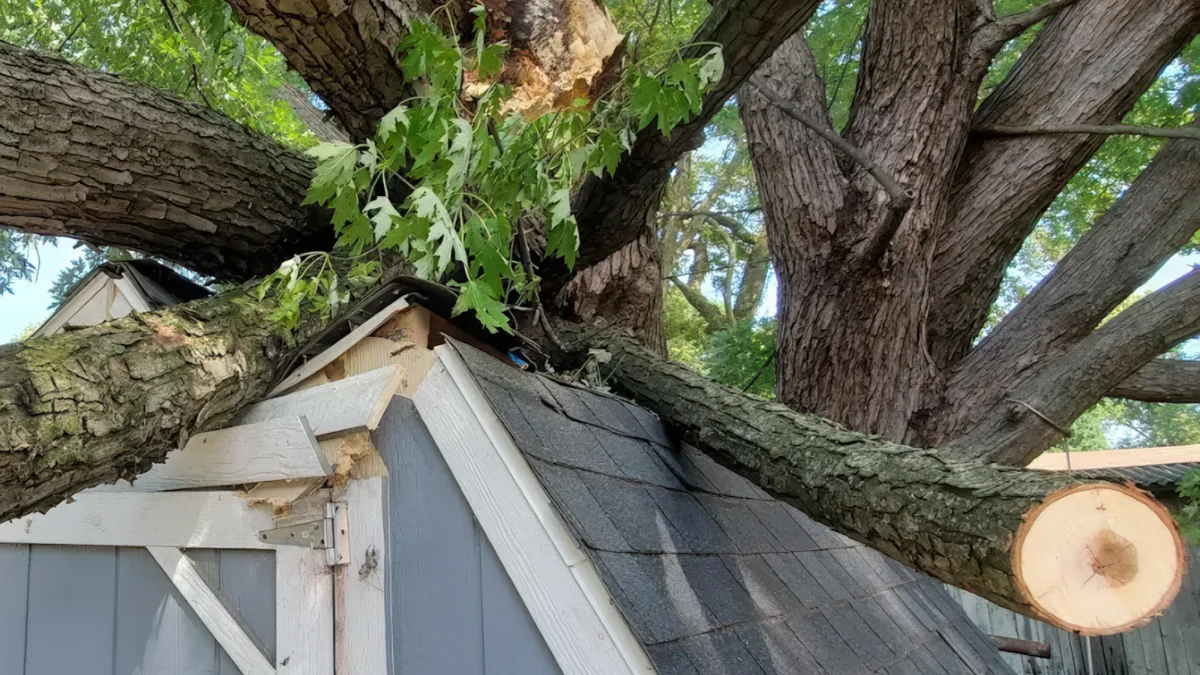
Yes. Whitledge Tree Service provides 24/7 emergency tree service for situations that can’t wait. Whether a tree has fallen on a structure after a storm or a tree is in immediate danger of coming down, the team is available around the clock to respond. Whitledge Tree Service specializes in removing trees from structures and is a member of Emergency Tree Responders, which means they’re trained and equipped for exactly these situations. Homeowners throughout Princeton, Gibson County, and the broader southern Indiana area can count on a fast response when it matters most.
What areas does Whitledge Tree Service cover for tree inspections and removals?
Whitledge Tree Service is based in Princeton, IN and serves Gibson County, Knox County, Vanderburgh County, Warrick County, Pike County, and Posey County. The team also serves communities including Vincennes, Evansville, Patoka, Hazelton, Oakland City, Boonville, Fort Branch, and surrounding areas throughout southern Indiana. For larger or more complex projects, Whitledge Tree Service extends services to neighboring states as well. If you’re in the region and have a tree concern, reach out to Whitledge Tree Service to confirm coverage and schedule a free estimate.
Concerned About a Tree on Your Property? Whitledge Tree Service Offers Free Estimates.
Whitledge Tree Service has served Princeton, Vincennes, Evansville, and communities throughout southern Indiana since 2008. Our licensed, insured team provides professional tree inspections, hazardous tree removal, and 24/7 emergency tree service. We have the largest crane in the service area for complex removals. Free estimates. Visit whitledgetreeservice.com to schedule your assessment.